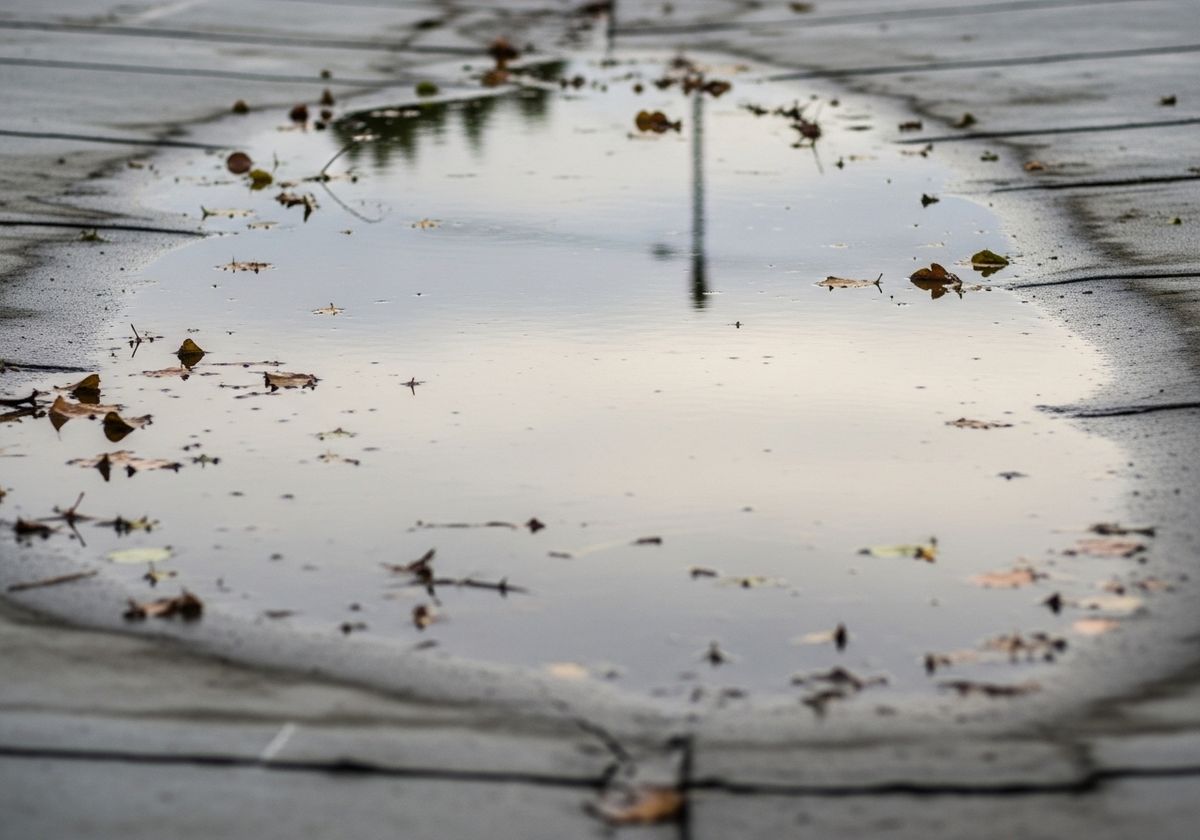
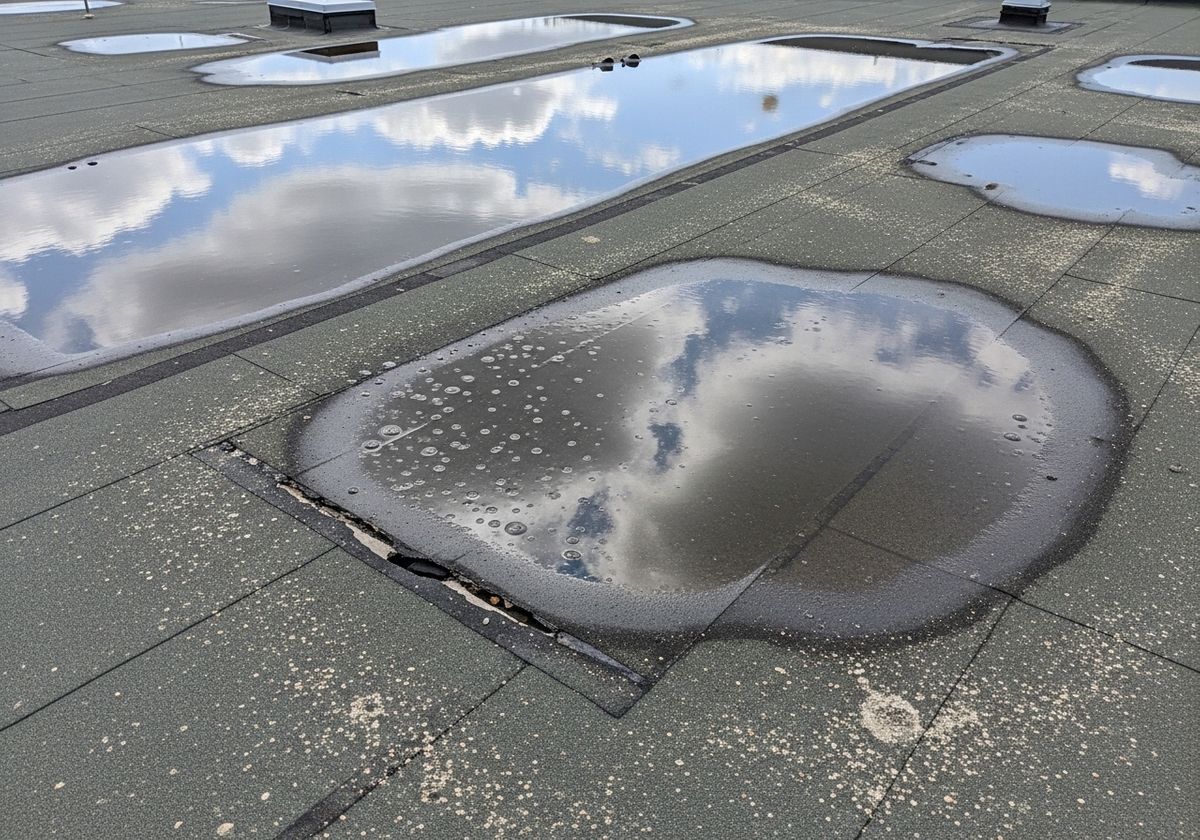
Ponding water on a flat roof might seem like a minor issue, but it can lead to significant problems and costly repairs if left unaddressed. Understanding the causes and consequences of ponding is crucial for maintaining the integrity of your roof and preventing long-term damage.
What is Ponding Water?
Ponding water refers to the accumulation of standing water on a flat or low-sloped roof for more than 48 hours after rainfall. Unlike pitched roofs that allow water to drain off quickly, flat roofs are prone to collecting water due to their minimal slope.
Causes of Ponding Water
Several factors can contribute to ponding water on flat roofs:
Poor Design and Installation: Inadequate slope or drainage systems during the initial construction can cause water to pool in certain areas.
Roof Deck Deflection: Over time, the roof deck can sag or deflect, creating depressions where water accumulates.
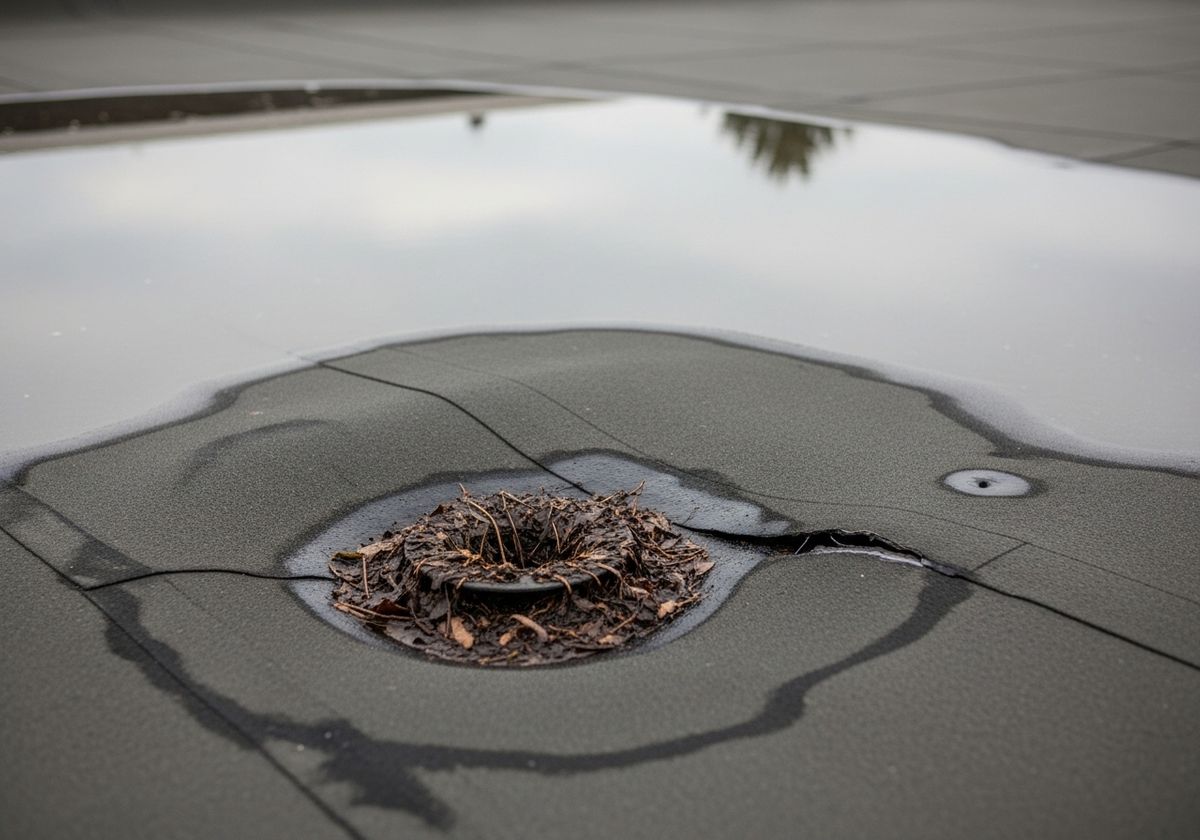
Clogged Drains: Debris, leaves, and other materials can block drains and prevent water from flowing off the roof.
Membrane Imperfections: Small punctures, blisters, or open seams in the roofing membrane can trap water and exacerbate ponding.
Damage Caused by Ponding Water
The consequences of prolonged ponding water can be severe:
Membrane Degradation: Constant exposure to water can break down the roofing membrane, leading to leaks and deterioration.
Structural Damage: Water can seep into the roof structure, causing rot, corrosion, and weakening of the building's support system.
Increased Weight Load: The added weight of standing water can strain the roof structure, potentially leading to collapse in extreme cases.
Mold and Algae Growth: Ponding water creates a moist environment that promotes the growth of mold, algae, and other microorganisms, which can further damage the roof and pose health risks.
Preventing Ponding Water
Taking proactive measures can help prevent ponding water and protect your flat roof:
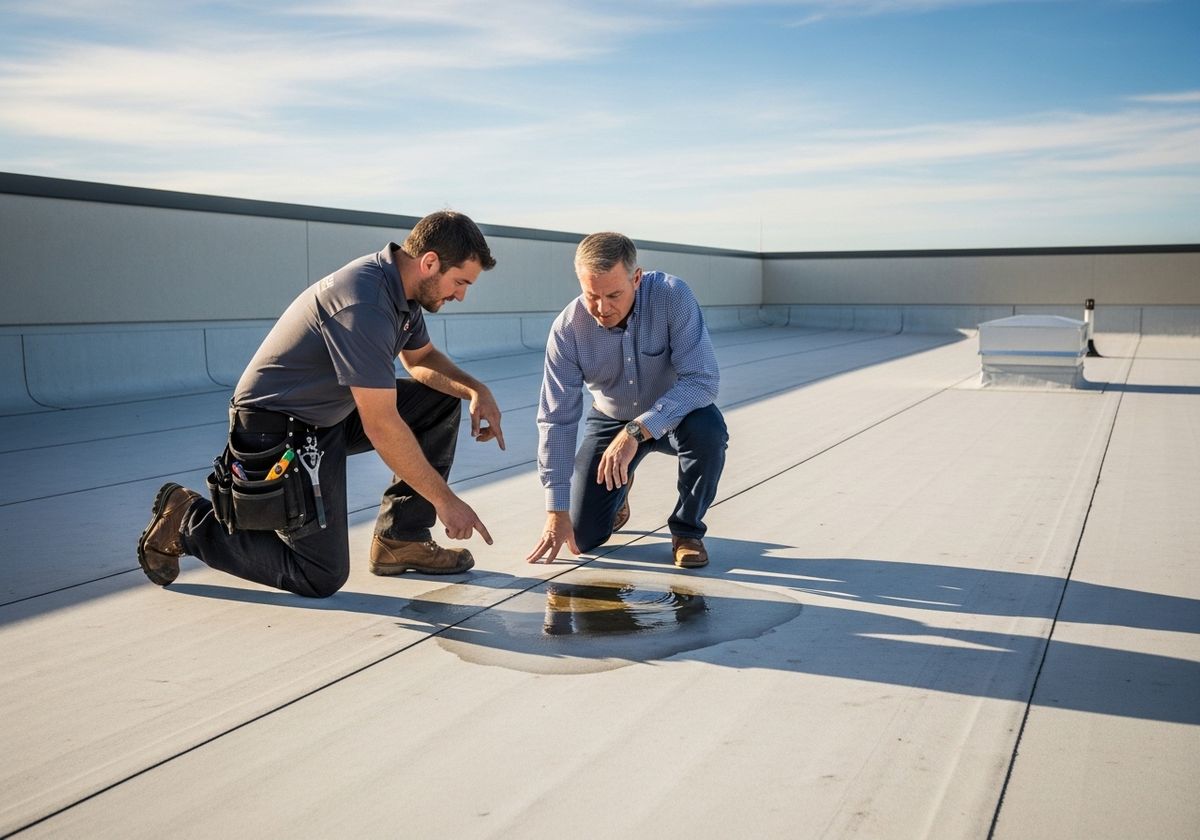
Regular Inspections: Conduct routine inspections to identify and address potential issues early on.
Proper Drainage: Ensure that the roof has an adequate slope and that drains are clear of debris.
Quality Materials: Use high-quality roofing materials that are designed to withstand prolonged exposure to water.
Professional Installation: Hire a qualified roofing contractor to ensure proper installation and attention to detail.
Addressing Existing Ponding Water
If you notice ponding water on your flat roof, take action promptly:
Identify the Cause: Determine the underlying cause of the ponding to address the issue effectively.
Improve Drainage: Clear any obstructions from drains and consider adding additional drainage points if necessary.
Repair Membrane Imperfections: Seal any punctures, blisters, or open seams in the roofing membrane.
Consider Roof Restoration: Explore roof restoration options to improve drainage and extend the life of your roof.
Ponding water is a serious issue that can lead to significant roof damage repair costs if left unaddressed. Regular inspections, proper maintenance, and timely repairs are essential for protecting your flat roof and preventing long-term damage. Whether you need roof damage repair, roof leak repair, or a complete roof restoration, GH Roofing Corp is here to help. With our commitment to "Exceptional Roofing Every Time" and our guarantee of 100% job effectiveness, you can trust us to keep your roof leak-free. Contact us today for a thorough inspection and reliable solutions, and experience the peace of mind that comes with top-quality customer service.